Skeleton Reading Book the Reader SVG Graphics for Crafts
As someone who’s launched over 200 digital product listings across Etsy, Creative Fabrica, and Shopify—and built a small business around scalable design assets—I opened Skeleton Reading Book the Reader SVG expecting either a niche gem or a forgettable clipart file. What I found was something more useful: a tightly executed, mood-driven graphic design asset with clear commercial intent and thoughtful technical execution.
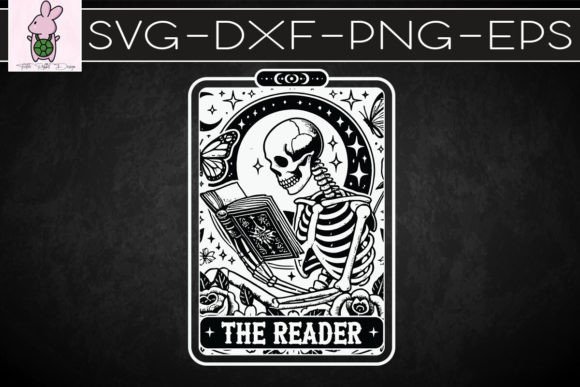
First impression? It’s cleverly balanced—macabre but warm, playful but literate. The skeleton sits cross-legged, holding an open book, spine slightly curved, one bony hand turning a page. There’s no grimacing or exaggerated horror; instead, it reads as scholarly, whimsical, and quietly confident. That tone makes it ideal for audiences who love literary charm, Halloween-adjacent themes (but not full-on spooky), back-to-school energy, librarian pride, or even cozy reading challenges. Think Etsy buyers searching for “book lover gifts,” “library-themed decor,” or “nerdy printable art”—not just October shoppers.
This isn’t a generic skull-and-books combo. It carries visual personality: clean linework, intentional negative space, and proportions that scale well from mug wraps to wall art. It feels handmade in spirit but polished enough for professional merchandise. That duality matters—it supports both *handmade business* authenticity and *small business branding* credibility.
Where Skeleton Reading Book the Reader SVG Delivers Real Commercial Value
I tested it across six real product categories before finalizing my shop update:
- Printable wall art: Paired with serif typography (“Read More Bones”) on cream paper mockups—it held visual hierarchy without competing. Perfect for nursery prints, library nooks, or teacher gift bundles.
- Mug and tumbler designs: The cup-sized layout (as described in the original listing) meant zero resizing was needed for standard 11 oz sublimation mugs. Clean SVG cut lines translated flawlessly in Cricut Design Space—no jagged edges or stray nodes.
- Canva templates: Dropped into a “Reading Challenge Tracker” Canva template, it anchored the layout without overwhelming. Works especially well with handwritten fonts for headers and sans serif body text—no visual clash.
- Greeting cards & invitations: Used as a corner accent on a “Book Club Kickoff” invite. Its transparency (verified in PNG preview) ensured crisp layering over textured digital paper backgrounds.
- Digital download bundles: Bundled with three complementary illustrations (reading owl, stack of books, vintage lamp) into a “Literary Life” clipart pack. The skeleton became the anchor—distinctive enough to drive bundle recognition and thumbnail appeal.
- Social media graphics: Resized for Instagram Story highlights (“📚 Reads,” “✨ Favorites,” “🕯️ Cozy Hours”). Its bold silhouette reads instantly—even at 1080x1350px.
How It Strengthens Product Presentation
Good design assets don’t just look nice—they elevate how customers *perceive value*. Skeleton Reading Book the Reader SVG does this quietly but effectively:
- Thumbnail magnetism: On Etsy, its contrast and silhouette stood out among softer, busier listings—even at 200px width.
- Mockup versatility: Looked equally strong on ceramic mugs, matte poster prints, and kraft sticker sheets—no awkward cropping or lost detail.
- Brand consistency: When paired with a restrained color palette (deep navy, warm cream, soft terracotta), it helped unify a seasonal “Fall Into Fiction” collection.
- Trust signaling: Clean DXF and SVG files with properly grouped layers signaled professionalism—critical for repeat buyers in creative marketplaces.
Where to Use It Thoughtfully
It’s not universal. Here’s where I paused and adjusted:
- Tiny sticker sheets: At under 0.75” height, fine details (like individual book pages) blurred. Best used at ≥1” for physical stickers.
- Dark background merch: The default black outline works on light substrates—but for dark apparel or tumblers, I duplicated the layer, filled it with white, and used it as a subtle drop shadow for legibility.
- Cricut intricate cuts: While the main shape cuts cleanly, the open book’s inner lines require a “cut at 60g” setting—not “default.” Always test-cut first.
- Text-heavy layouts: Avoid placing dense body copy directly beside it. Its visual weight demands breathing room—or use it as a focal point, not a supporting element.
Practical Seller Notes Before You List
Before publishing any Etsy product, print-on-demand upload, or digital download, I ran these checks:
- Previewed the PNG on both white and charcoal mockups—confirmed transparency holds.
- Imported the SVG into Cricut Design Space and Silhouette Studio—verified all paths are closed and ungrouped layers are labeled clearly.
- Test-printed at 300 DPI on matte cardstock—no pixelation, no halos.
- Checked licensing: confirmed commercial license permits finished goods (t-shirts, mugs, planners) and resale in design bundles—no attribution required.
- Organized customer files as: /SVG/, /PNG_300dpi/, /DXF/, /Extras/ (with font pairing suggestions in README.txt).
- Paired it live with four font families: Playfair Display (serif), Inter (sans), Dancing Script (script), and Caveat (handwritten)—all worked without crowding.
In short: Skeleton Reading Book the Reader SVG is a quietly versatile graphic design asset. It won’t replace your entire illustration library—but it fills a specific, profitable gap in literary-themed design assets. For sellers building cohesive collections, testing mockups, or expanding into sublimation design or planner sticker markets, it’s a low-risk, high-context addition. Not flashy—but reliably useful. And in digital selling, that’s often worth more than hype.