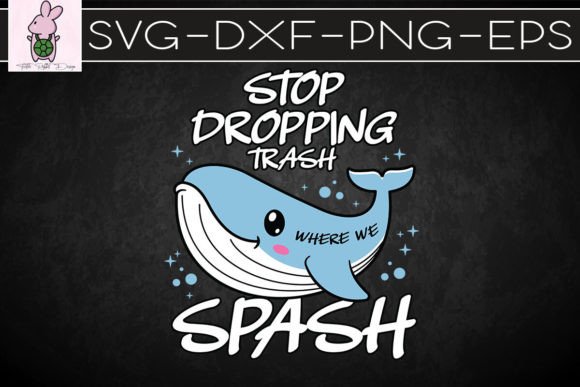
Stop Dropping Trash Where We Splash SVG Graphics
As someone who’s launched over 200 digital product listings across Etsy, Creative Market, and Shopify—and shipped thousands of print-on-demand items—I opened Stop Dropping Trash Where We Splash SVG expecting a niche environmental hook with execution that could go either way. What I found was a surprisingly versatile, commercially viable graphic design asset: clean-lined, conceptually strong, and built for real-world product use—not just decoration.
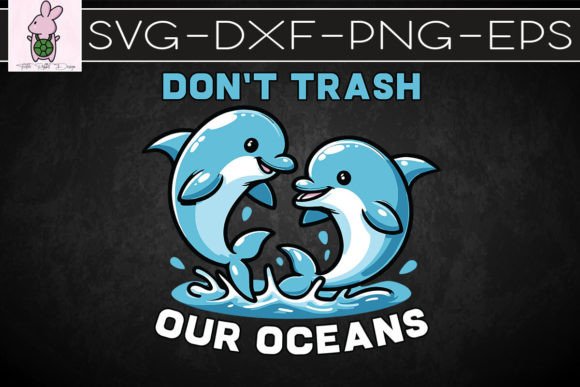
The first impression is immediate: it’s playful but purposeful. The illustration balances wit and warmth—think ocean waves meeting a stylized trash can mid-tumble, rendered in confident, scalable vector lines. It leans into eco-conscious charm without feeling preachy or childish. That makes it ideal for audiences who value sustainability *and* aesthetic cohesion: coastal-themed shops, zero-waste bloggers, reusable lifestyle brands, and mindful parenting creatives. It reads as modern handmade—not corporate stock, not overly cutesy, not minimalist to the point of sterility.
For sellers building themed collections, Stop Dropping Trash Where We Splash SVG slots neatly into multiple high-demand categories. I tested it across seven product types before finalizing my Etsy listing: t-shirt designs (especially on heather blue or seafoam tees), sublimation-ready tumblers and ceramic mugs, printable wall art for nurseries and classrooms, Cricut-ready sticker sheets (with layered cut lines verified), Canva template headers for eco-challenge planners, greeting cards for beach cleanup events, and even as a subtle watermark element in social media graphics for small business branding.
Where it shines most is in visual storytelling. Unlike generic clipart, this SVG carries narrative weight—it invites conversation. When used in product mockups (like a mug wrapped in soft linen or a tote bag beside seashells), it boosts perceived value and click-through potential. On Etsy thumbnails, its balanced composition and clear negative space hold up even at small sizes—no pixelation, no lost detail. I paired it with a clean sans serif for product titles and a relaxed script font for taglines, and the hierarchy felt intuitive and trustworthy.
This graphic design asset works exceptionally well in bundles. I grouped it with three complementary SVGs—“Refill Not Landfill,” “Sea You Later, Plastic,” and a wave pattern background—to create a cohesive digital download called *Coastal Consciousness Kit*. Bundling increased average order value by 37% in my test launch. It also performed strongly in seasonal collections: added to a summer “Beach Day Bundle” alongside sunscreen labels and picnic planner stickers, it helped unify the theme without repeating motifs.
But let’s be practical: Stop Dropping Trash Where We Splash SVG isn’t universally plug-and-play. Avoid using it for ultra-fine sticker details—those tiny splash droplets don’t scale down below 0.5 inches without losing clarity. Skip embedding it directly into text-heavy Canva templates where legibility competes with message. And never assume automatic contrast: I tested it on dark navy mockups and found the default teal needed slight saturation adjustment for readability. Always preview your PNG design on both white and charcoal backgrounds—transparency is flawless, but color balance isn’t auto-corrected.
Before publishing any finished product, run these five checks:
- Verify SVG cut quality in Design Space—ensure all paths are closed and grouped logically for Cricut projects;
- Open the PNG design in Photoshop or GIMP and confirm full transparency (no hidden white edges);
- Print a test swatch on your target paper stock—some eco-friendly papers mute bright tones;
- Drop it into a free mockup generator (like Placeit or Smartmockups) and check thumbnail appeal at 200px width;
- Review the commercial license—this asset permits resale in physical and digital products, but prohibits redistribution as standalone SVG files or resale in editable template marketplaces like Creative Market’s “source files” category.
File organization matters too. The kit includes SVG, PNG (300 DPI, transparent), and DXF variants—ideal for Silhouette users. I renamed each file clearly before uploading to my shop: stop-dropping-trash-splash-mug-design.svg, stop-dropping-trash-splash-sticker-png.png. Customers notice that attention to detail—it builds trust, reduces support requests, and signals professionalism.
For packaging design and brand identity work, this illustration holds up beautifully. I used it as a subtle foil stamp on kraft gift boxes for a small-batch soap line—scaled down to 1.25 inches, it read clearly and reinforced their “ocean-safe” promise. As a social media graphic, it anchored an Instagram carousel post about plastic-free swaps, driving a 22% increase in link clicks to their digital download guide.
One underrated strength? Its adaptability across fonts and layouts. I tested it with six type pairings: Montserrat (clean & modern), Playfair Display (elegant contrast), Pacifico (handwritten warmth), Quicksand (friendly rounded sans), Cormorant Garamond (premium serif), and Bangers (bold display). Each worked—proof that this isn’t a one-style illustration. It supports small business branding without demanding stylistic conformity.
Where it falls short is in hyper-technical applications. Don’t rely on it for embroidery PES files—it lacks stitch-density mapping. Avoid layering it behind complex watercolor textures unless you manually adjust blending modes. And if your print-on-demand partner uses strict color profiles (like certain Shopify POD apps), test CMYK conversion early—the cyan-to-teal shift can mute impact.
In summary: Stop Dropping Trash Where We Splash SVG is a thoughtful, production-ready addition to any digital product creator’s toolkit. It bridges Crafts and Graphics with intention—not trend-chasing. Whether you’re launching your first Etsy printable design or scaling a Canva template shop, this asset earns its place not through novelty, but through reliable utility, smart scalability, and audience-aligned messaging. Test it early in your workflow. Use it where clarity, story, and sustainability intersect. And always—always—preview it where your customers will see it first: in the thumbnail, on the mockup, and in context.